
Saint Kitts and Nevis: An Island Guide
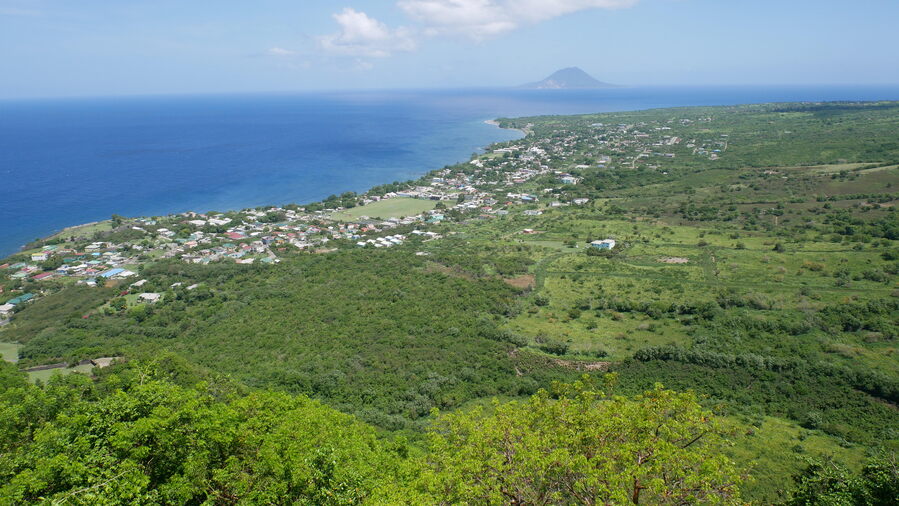
Clad in verdant, jungle-covered hills, the twin islands of St. Kitts and Nevis are emerald specks in the Caribbean Sea.
On St. Kitts, the dormant, crater-topped cone of Mount Liamuiga rises above old sugar plantations. Its smattering of historical relics is a reminder of the colonial past that shaped the modern Caribbean.
Across the channel, Nevis moves to a slower beat—its golden beaches, tranquil villages, and leafy gardens beckoning travelers with a laid-back charm.
St. Kitts and Nevis: an Overview
Located in the West Indies between Montserrat and St. Eustatius, St. Kitts and Nevis contain plenty of variety for those who enjoy mixing sun and sand with mountain adventures.
St. Kitts, officially known as Saint Christopher Island, is the larger of the two islands that make up the Caribbean country. Home to the capital city of Basseterre, the island is dotted with relics of its colonial past.
Nevis lies just across the Narrows from St. Kitts. The small island has some compelling historical attractions of its own, including the home in which American Founding Father Alexander Hamilton was born.
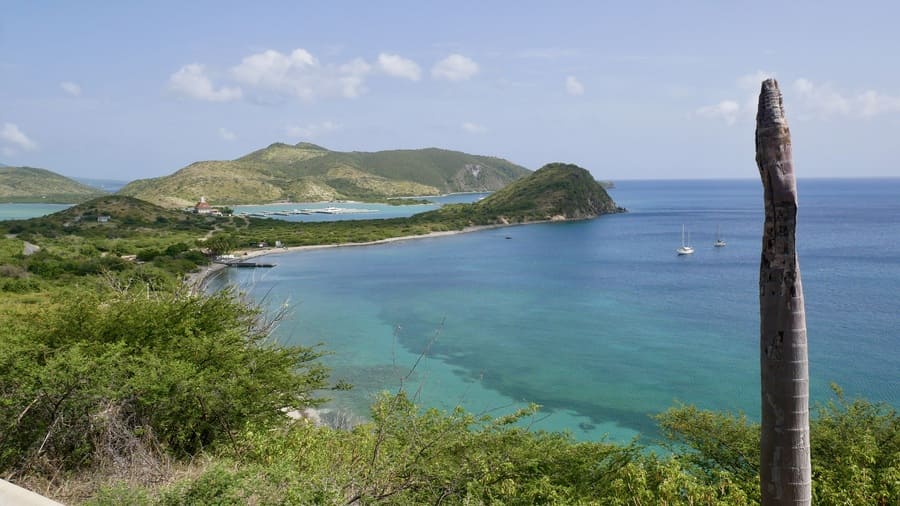
European influence in St. Kitts dates back to 1624, when Thomas Warner established a British colony on the island. Saint Kitts quickly became a center of sugar production, relying heavily on enslaved African labor. Its strategic location made it a focal point of conflict between European powers—particularly the British and French—throughout the 17th and 18th centuries.
In 1983, St. Kitts and Nevis gained full independence from Britain.
Today, the independent island nation is the smallest in the Western Hemisphere by both land area and population. It has an area of 101 square miles and just under 50,000 inhabitants.
Things to do in St. Kitts
On St. Kitts, you won’t find the uninterrupted stretches of powdery white sand that draw visitors to places like Anguilla, Saint Barths or Eleuthera. The beaches on the island have a mix of grey and tan sand that is often littered with seagrass.
Like Saba or Saint Lucia, much of the island’s appeal lies in its lush interior.
Nestled in its rolling green hills, St. Kitts contains a lovely mix of attractions—including a crater-topped mountain, old sugar estates, resplendent gardens, and a UNESCO-listed fortress that showcase stunning views of the island’s coastline.
Visit Cockleshell Beach
Cockleshell Beach, located on the southern tip of St. Kitts, is one of the island’s most popular stretches of sand. The beach boasts soft white sand, turquoise waters, and views of neighboring Nevis.
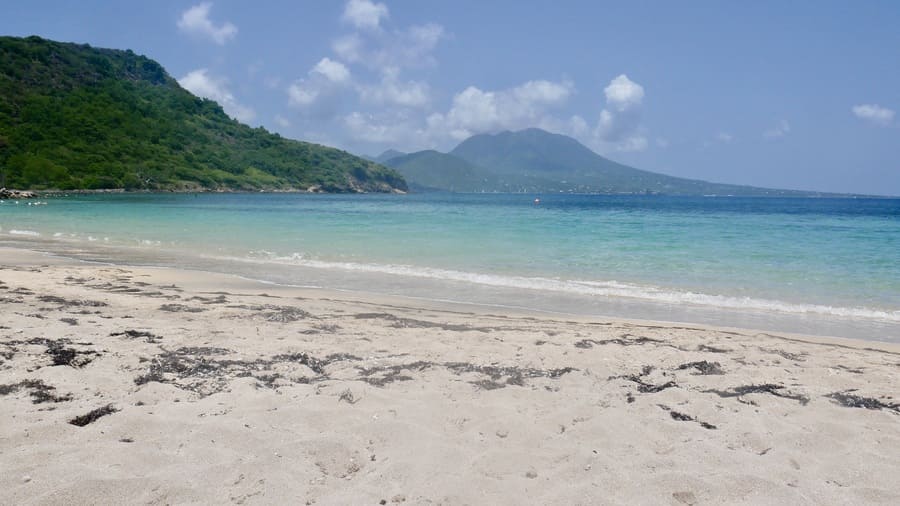
When we visited Cockleshell Beach, we found it to be almost completely tourist-free. A boat full of locals joined us for a bit, but we otherwise enjoyed the stretch of sand completely to ourselves. Cockleshell’s calm waters and fine powdery sand were perfect for our toddler.
We agreed that Cockleshell Beach was quite nice overall, but it couldn’t really compare to the Caribbean’s best—places like Trunk Bay in the St John USVI, or North Beach on Spanish Wells.
Stop at the Timothy Hill Overlook
Timothy Hill Overlook, perched along the southeastern peninsula of St. Kitts, offers one of the island’s most iconic panoramic vistas. The viewpoint lies just south of Frigate Bay, on a narrow strip of land that links St. George Basseterre Parish with the country’s larger population centers.
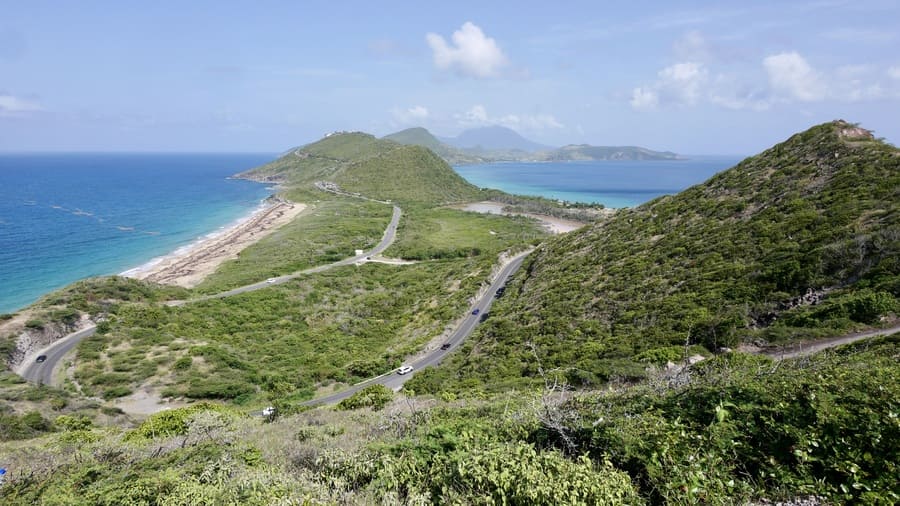
From the hilltop lookout, you can witness the striking contrast between the calm, turquoise waters of the Caribbean Sea and the more rugged Atlantic Ocean.
The overlook also provides sweeping vistas of Frigate Bay, Friar’s Bay, and the neighboring island of Nevis in the distance.
Ride the St. Kitts Scenic Railway
The Scenic Railway in St. Kitts is known as the “Last Railway in the West Indies.” The historic narrow-gauge train, once a vehicle for transporting sugar cane across the island, is now one of the country’s prime tourist attractions. The train’s open-air double-decker cars showcase panoramic views of the coastline and mountains. Tours come complete with a knowledgeable guide and complimentary drinks.
Since we were renting a car and planned on exploring the island independently, we chose not to fork over $100+ per person for train tickets.
Despite the hefty price tag, I imagine that the train tour would be ideal for cruise ship passengers or travelers with limited time on the island.
Visit the Brimstone Hill Fortress Park
The Brimstone Hill Fortress is a UNESCO World Heritage Site and one of the best preserved historical fortifications in the Americas. It was designed by British military engineers and built by enslaved Africans.
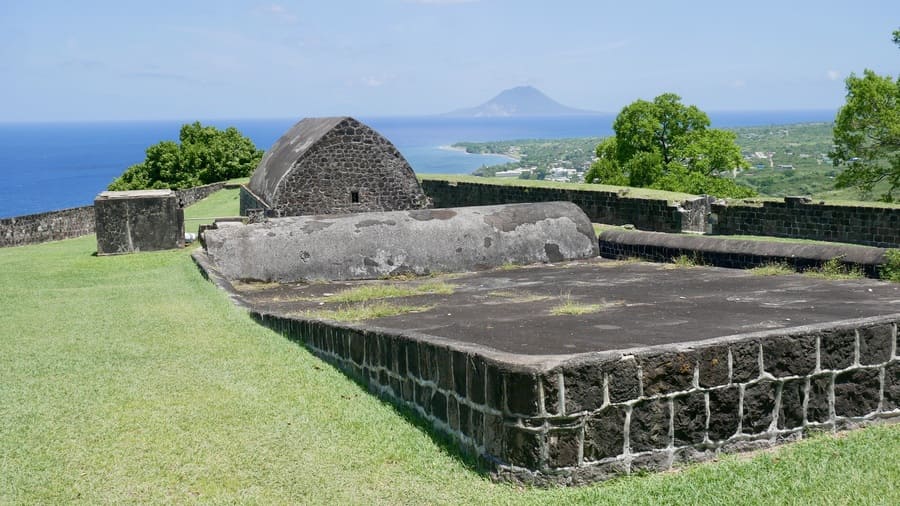
The sprawling complex dates back to the 17th century. It sits atop a limestone hilltop that soars 800 ft above sea level.
The setting of the archaeological site is a large part of its appeal. From the castle walls, you can spot St. Eustatius in the distance, jutting out of the sapphire sea.
If you turn around 180 degrees, you have an up-close vantage point of the island’s lush interior.
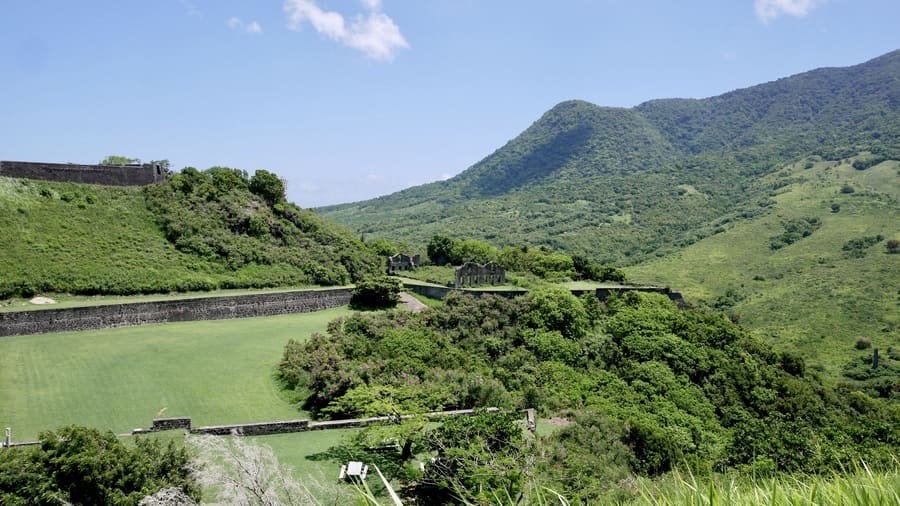
The fortress is open daily from 9:30am-5:30pm. Entering the national park costs $15 per person.
Visit Rodney manor and Caribelle Batik
Rodney Manor is a historic estate that dates back to the 17th century. It is part of the larger Wingfield Estate, which once functioned as a sugar plantation.
The grounds of the estate are beautifully landscaped and bursting with lush foliage and colorful flowers. Ruined remnants of an old sugar mill lie scattered about the property.
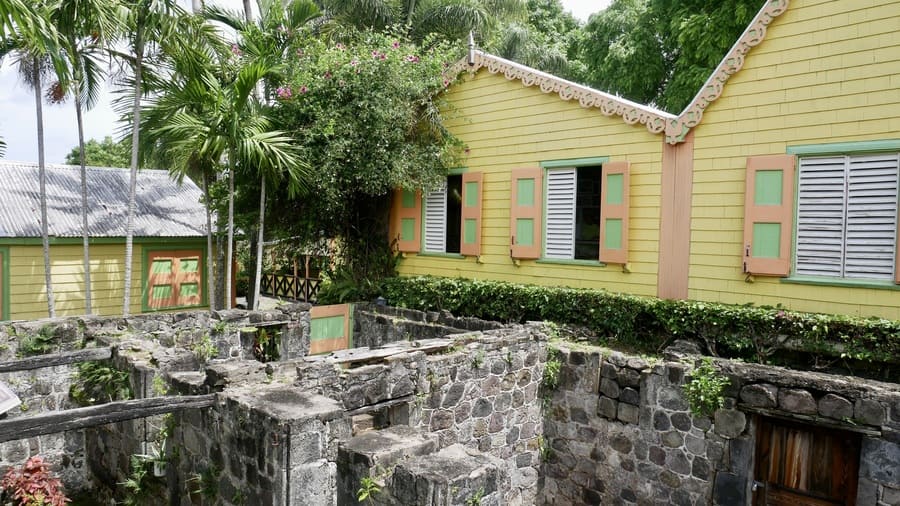
Today, most tourists visit Romney Manor in order to shop at Caribelle Batik—a business that has produced and sold batiks since the 1970s.
Artisans at Caribelle use traditional Indonesian batik techniques to decorate fabric with Caribbean-inspired motifs.
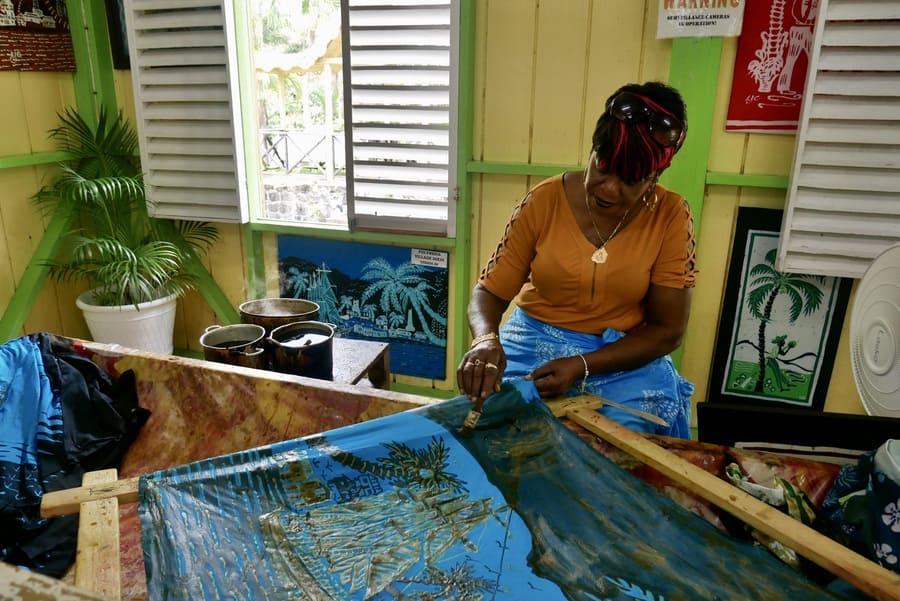
On the manor grounds, a lovely shop sells batik textiles, clothing, handbags, and souvenirs. You can watch live demonstrations of the batik-dying process at the store’s entrance.
Visit the Wingfield Estate
The Wingfield Estate is a defunct sugar plantation near Romney Manor. One of the oldest sugar plantations in the Caribbean, it dates back to the early 17th century. The grandfather of former U.S. President Thomas Jefferson was the plantation’s original owner.
Today, the remnants of the estate—including a well-preserved aqueduct, mill, and rum distillery—stand as a testament to the island’s long and complex history of sugar production and colonial influence.
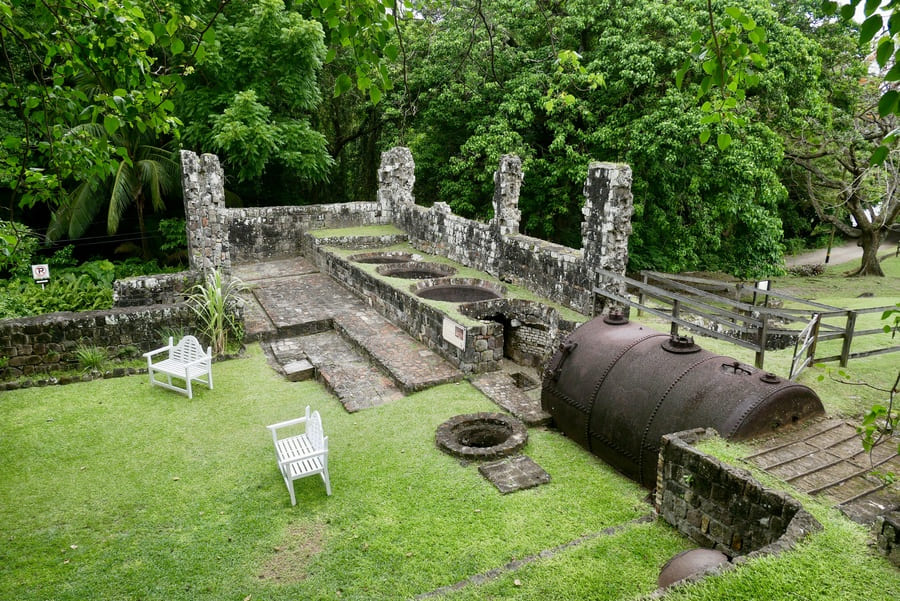
On the grounds of the Wingfield Estate, you can freely explore ruins and learn about the techniques used in sugar and rum production during the plantation era.
Informational displays and placards help bring the ruins to life.
Hike Mount Liamuiga
In the indigenous Kalinago language, Liamuiga translates to “fertile isle.”
Though the dual-island country of St. Kitts now goes by its official anglicized name, the island’s tallest mountain and main geographical feature still uses the original name.
Mount Liamuiga, standing at 3,792 ft, is the highest peak in the Leeward Islands (an archipelago in the northern Antilles that extends from the U.S. Virgin Islands to Guadeloupe). A strenuous 4-mile round-trip trail leads to a cloud forest at the summit of the dormant stratovolcano.
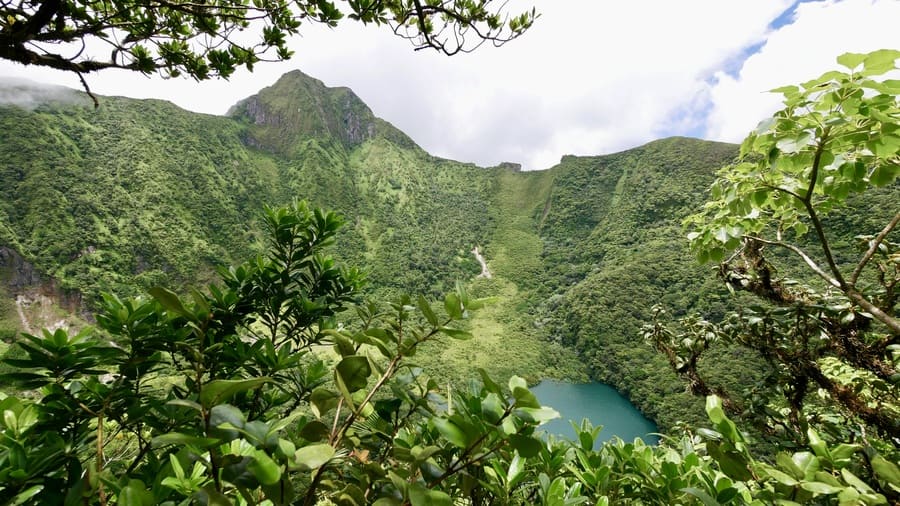
The path up Mount Liamuiga is quite steep and muddy in some sections. We didn’t have problems ascending while Dan carried our 2.5-year-old in the hiking pack and I was 20 weeks pregnant, but we still found the hike more demanding than expected. On the trail, we encountered steep inclines and sections that required scrambling over rocks and exposed tree roots.
Though we hiked the mountain independently and had no issues, a vast majority of other hikers we encountered were accompanied by guides.
Visit South Frigate Bay
Many of the best restaurants in St. Kitts can be found on the bustling stretch of beachfront at South Frigate Bay. It isn’t the most beautiful stretch of sand in the Caribbean by any means, but the beach is packed with bars and eateries. If you’re in search of nightlife, this is the place to be.
South Friar’s Bay
South Friar’s Bay offers a stretch of golden sand and views of the island’s unspoiled coastline. Lined by lush vegetation and lacking beachfront development, it is a nice place to relax for a few hours.
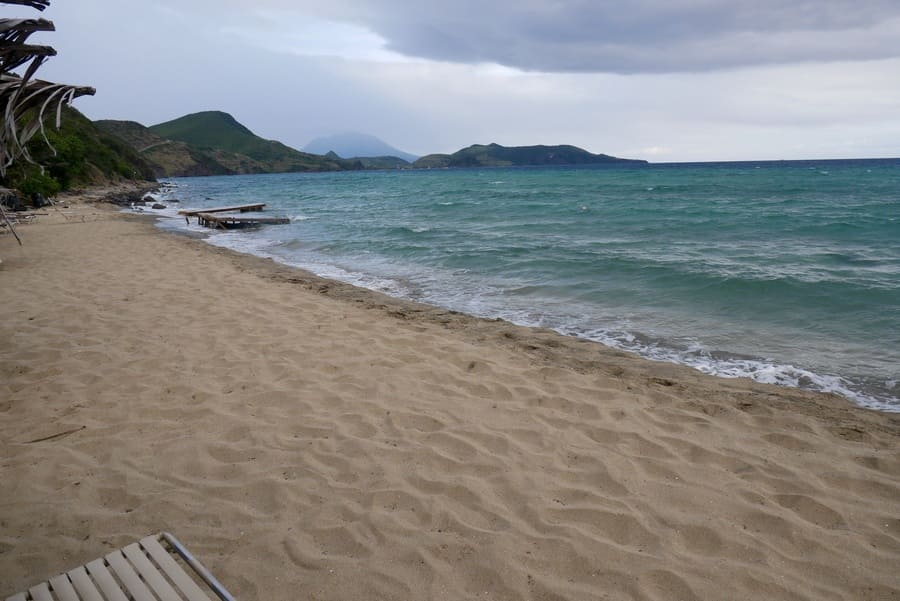
At the north end of the beach, you’ll find the upscale Carambola Beach Club. At the south end, a gravel road takes you to the rustic Shipwreck Beach Bar.
We enjoyed a meal at Shipwreck followed by a few hours of hanging out on the beach.
Look for Vervet Monkeys
The green vervet monkeys on St. Kitts took us completely by surprise.
Originally brought to the island by French settlers in the 17th century—likely as pets or companions—the monkeys have since flourished in the wild.
Today, their population is estimated to rival or even exceed that of the island’s human population.
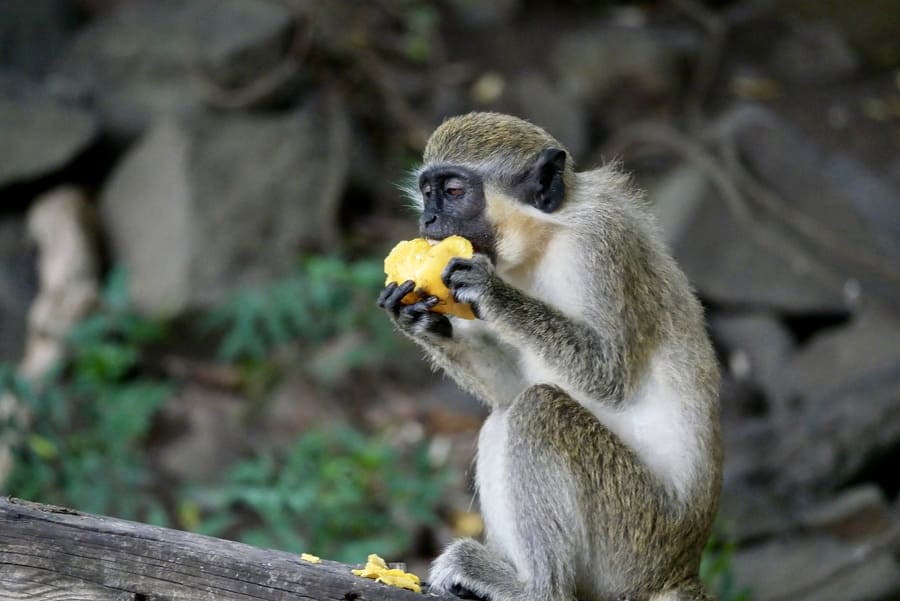
As we drove around the island, we found monkeys roaming the countryside, darting across roads, and searching for food scraps near restaurants.
Though not a native species, the green vervet monkeys are an integral part of St. Kitts’ ecosystem and cultural identity.
Things to Do on Nevis
The island of Nevis has a sleepy atmosphere that distinguishes it from its bigger and busier neighbor. The absence of a cruise dock or major airport (the Nevis airport only serves a few intra-Caribbean destinations) makes Nevis feel somewhat undiscovered despite its historical importance.
Nevis’s beaches are modest by Caribbean standards, and its attractions are somewhat understated.
But whether Nevis is your primary destination or a day trip from St. Kitts, you’ll find plenty to do to keep you occupied. The tiny island is home to historical monuments, gardens, beaches, and hot springs.
We traveled to Nevis as a day trip but could have easily spent a few days on the island.
Visit the Birthplace of Alexander Hamilton
Alexander Hamilton, one of the Founding Fathers of the United States, was born on Nevis Island in the 18th century. At the time, Nevis was a bustling center of sugar production, and its capital, Charlestown, served as a key port in the British West Indies.
Hamilton’s early childhood was marked by financial hardship and instability. After the death of his mother when he was 13, Hamilton began working for a trading company based on the island of St. Croix. His remarkable writing skills and sharp intellect drew the attention of local leaders, who raised money to send him to the American colonies.
Hamilton attended King’s College (now Columbia University). From there, he got involved in revolutionary politics and later played a key role in founding the U.S. financial system.
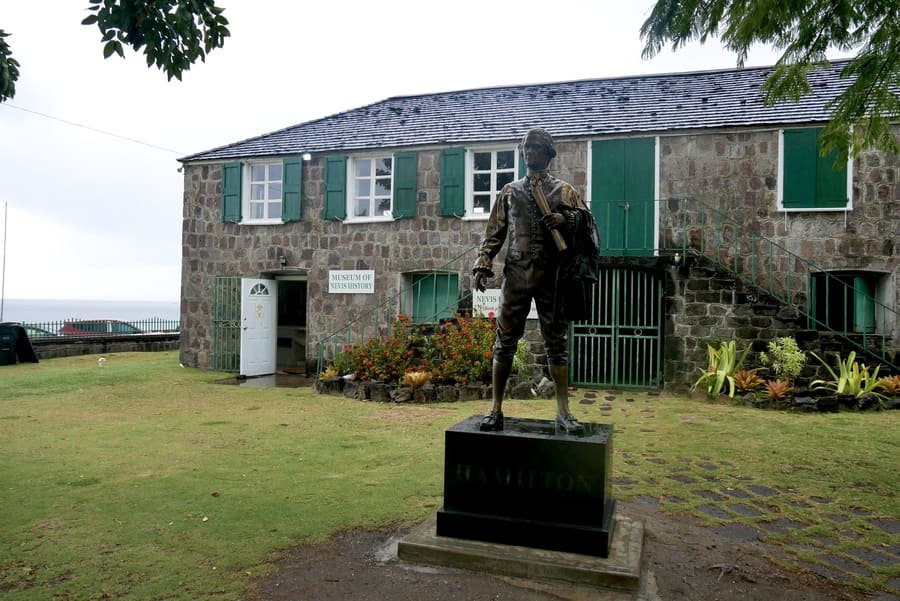
Today, the Museum of Nevis History occupies Hamilton’s birthplace. The building, a modest two-story Georgian-style stone structure in Charlestown, has been reconstructed after damage from past hurricanes.
The site serves as a cultural and historical monument, housing exhibits on Nevisian heritage and Hamilton’s early life.
Pinneys Beach
The longest and most beautiful beach on Nevis, Pinney’s Beach is a four-kilometer stretch of gray-gold sand. Though it is a strong contender for the best beach in St. Kitts and Nevis and is home to the luxurious Four Seasons Resort, Pinney’s Beach still retains a rustic charm. Lush vegetation abuts the stretch of sand, while Mount Nevis towers in the background.
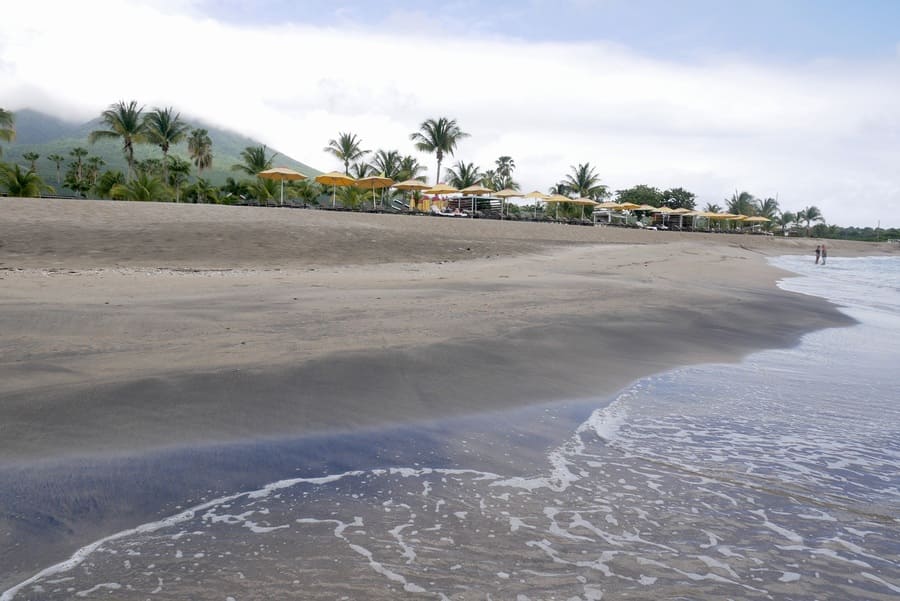
You’ll find a handful of beach bars, restaurants, and hotels along Pinney’s Beach, but the atmosphere is remarkably laid-back. We found the beach spacious, uncrowded, clean, and ideal for swimming.
Lover’s Beach
Lover’s Beach is a secluded stretch of sand that lies tucked away on the island’s northern coastline. The beach is backed by lush vegetation and offers sweeping views of the Caribbean Sea and St. Kitts.
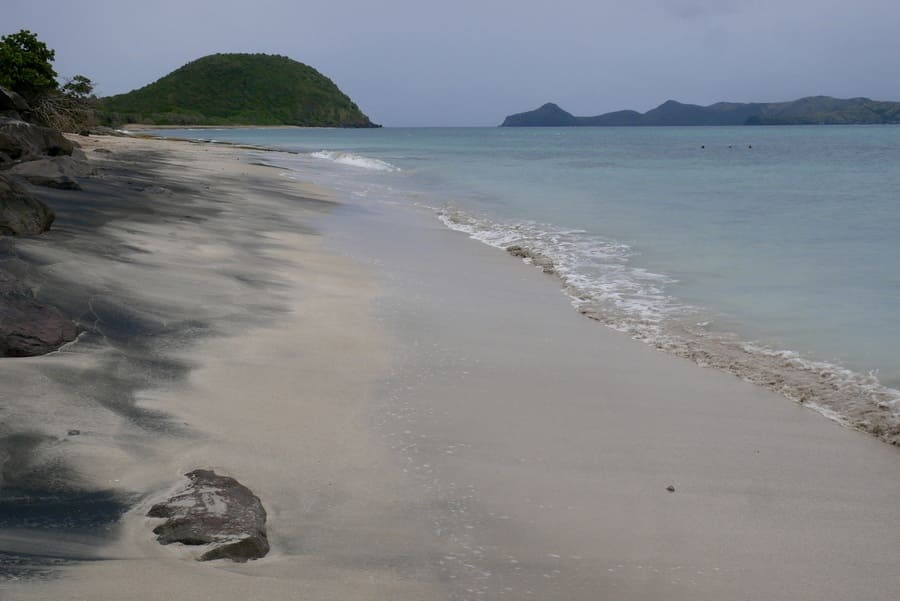
With its whitish sand and lack of development, Lover’s Beach is well worth a stop on a round-the-island drive.
I’d prioritize Pinney’s Beach or Oualie Beach if you’re looking to do some swimming or beach lounging, but Lover’s Beach gets the scenic edge due to its white sand and views of St. Kitts.
Saint Thomas Anglican Church
Built in 1643, St. Thomas is the oldest active Anglican church in the Caribbean. The church lies right along the island’s main ring road, just outside Charlestown.
The structure’s simple yet elegant design includes arched windows, a modest bell tower, and a setting overlooking the sea.
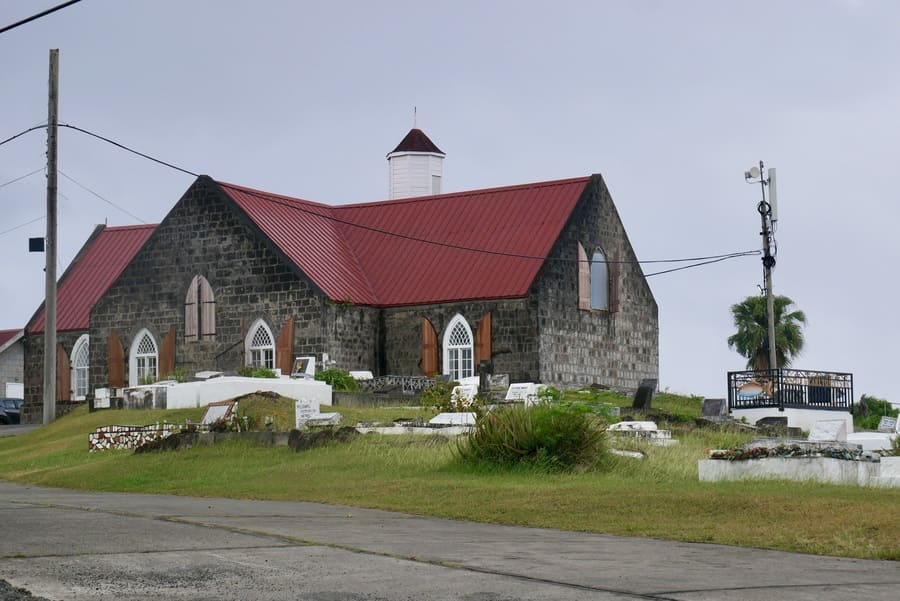
One gravesite in the church cemetery belongs to Samuel Jefferson, believed to be the great-great-great-grandfather of US President Thomas Jefferson.
The Cottle Church
Now a ruined structure surrounded by greenery, the Cottle Church is one of the island’s most poignant historical landmarks.
Built by Thomas Cottle in 1820, the church was remarkable for its time because it was designed for enslaved people and their owners to worship together—a radical idea during the era of slavery.
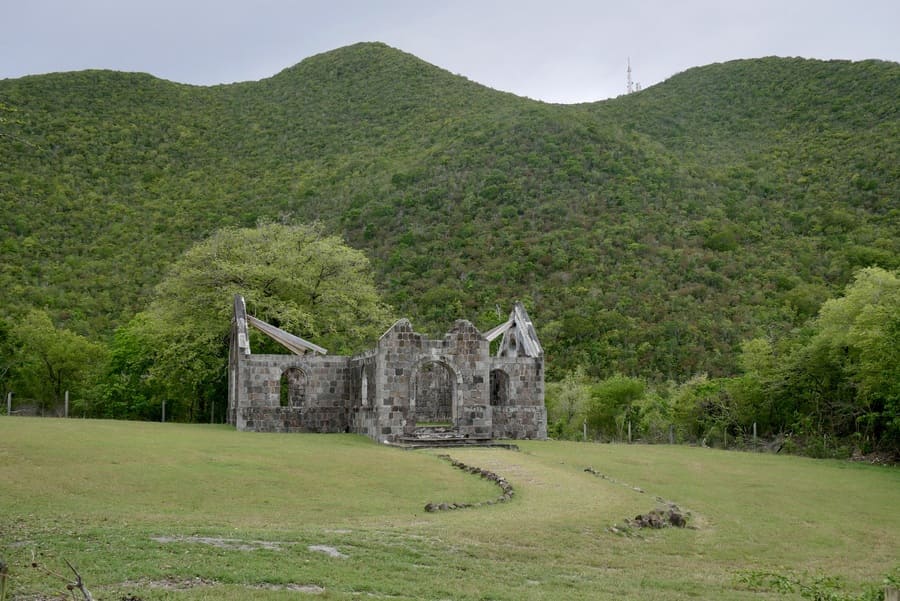
After Thomas Cottle’s death in 1828, the church became abandoned and fell into disrepair.
It remains one of the island’s main historical attractions.
Nevis Botanical Garden
The Nevis Botanical Garden is among the top places to visit on Nevis. Spread across eight beautifully landscaped acres, the gardens showcase an assortment of tropical plants. Meandering pathways lead visitors past fountains, sculptures, and ponds filled with water lilies.
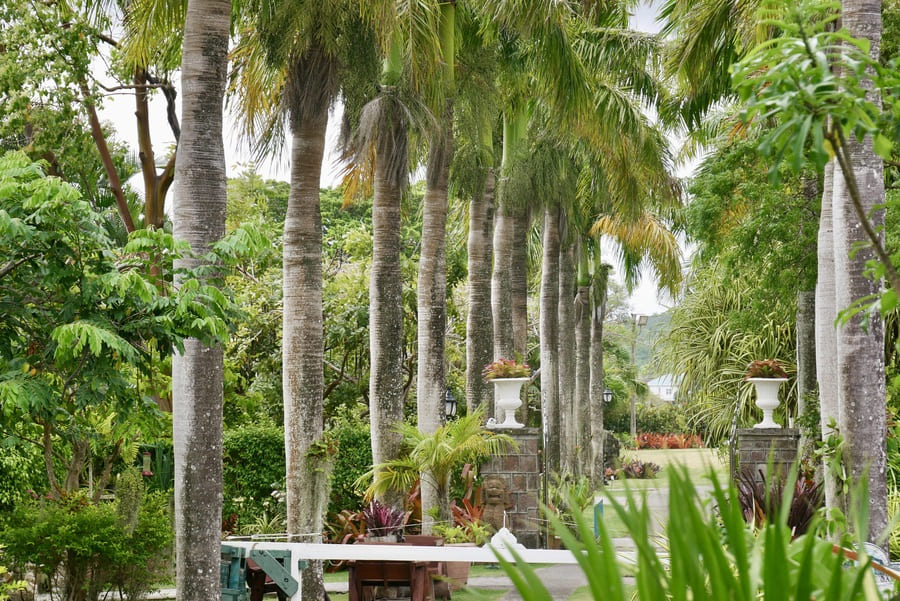
I’d read wonderful things about the tropical garden and its diverse array of lush flora before my arrival on Nevis.
Unfortunately, when we reached the garden gates, we found that they were locked. I had somehow failed to realize that the garden is closed to visitors on Thursdays.
Nevis Hot Springs
Nevis’s geothermal springs, rich in minerals and naturally heated by volcanic activity from Nevis Peak, have been cherished for centuries for their soothing and therapeutic properties. The water emerges from the ground at around 108°F and flows into shallow stone pools where visitors can relax and soak.
Once frequented by European settlers and naval officers in the 18th and 19th centuries, the springs were part of the historic Bath Hotel, one of the Caribbean’s earliest luxury resorts and spa destinations.
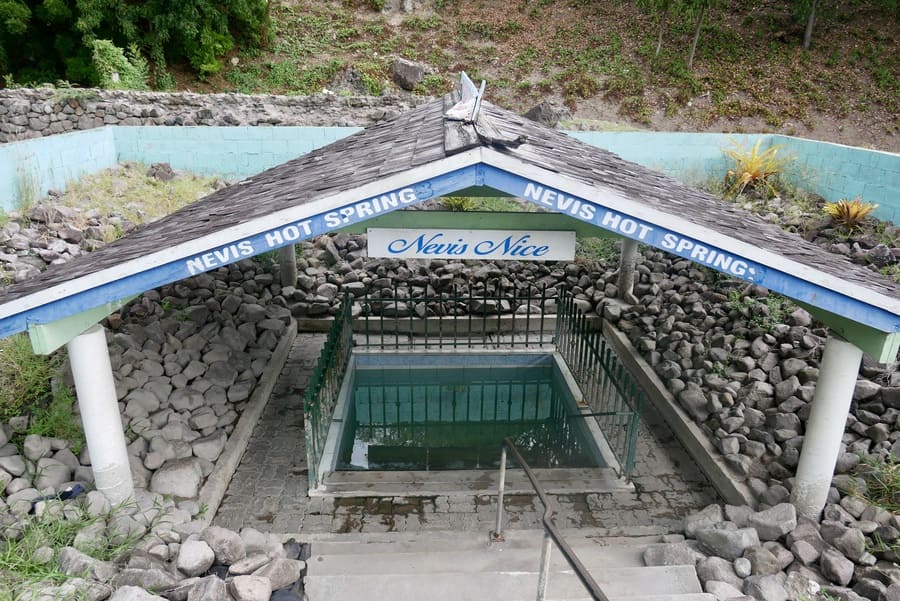
The springs are free to visit and fairly small.
Nevis Peak
Nevis Peak is the island’s centerpiece. The dormant volcano towers 3,232 ft above sea level and dominates the island’s landscape.
Hikers and nature lovers are drawn to the mountain’s lush rainforest vegetation and panoramic views of St. Kitts.
We chose not to summit Nevis Peak due to time constraints and the fact that we were traveling with a young toddler. Our onward travel plans already included three island summits, and we didn’t feel particularly keen on adding a fourth to our itinerary.
Where to Stay in St. Kitts and Nevis
We used St. Kitts as our home base when traveling around the twin islands. Saint Kitts and Nevis is a small enough country that you can easily tour its most popular attractions regardless of where you choose to stay.
Ultimately, it just comes down to preference and price point.
St Kitts Accommodation
We stayed at the Koi Resort by Hilton in St. Kitts for six nights. At the time of our booking, the resort was one of the more affordable hotel options on the island. We found it to be a great value for money. The Koi is a step down from the St Kitts Mariott and a good midrange option.
The Park Hyatt in St Kitts is the island’s most luxurious accommodation. We met a couple who was staying there during our hike up Mt Liamuiga. They had nothing but good things to say about the property.
Nevis Accommodation
The Four Seasons Resort in Nevis sits on beautiful Pinney’s Beach, at the base of the Nevis Volcano. It is the most luxurious accommodation in Nevis.
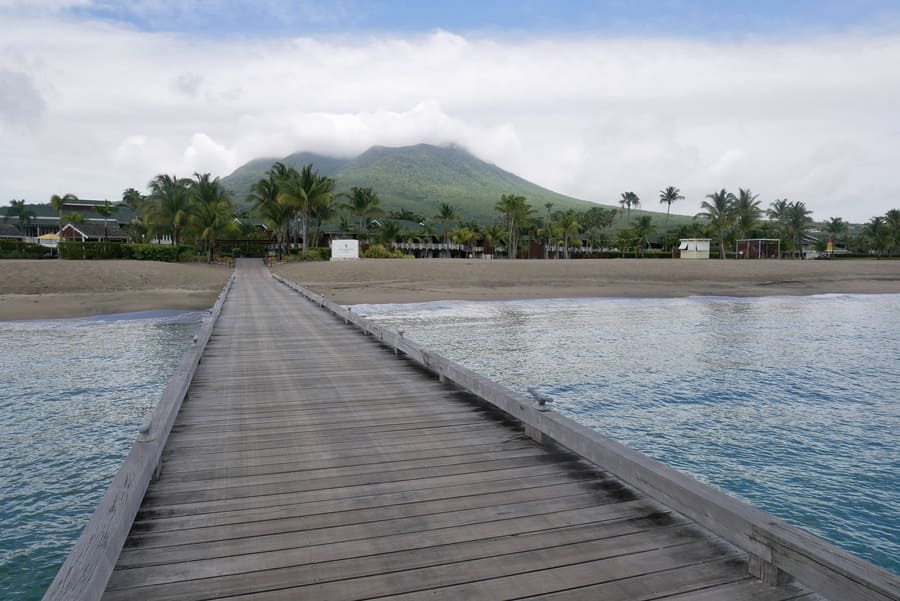
There are a handful of other noteworthy places to stay in Nevis at a friendlier price point. Among them, the Mount Nevis Hotel, the Montpelier Plantation, and the Hermitage Inn.
Getting to St. Kitts and Nevis
The airport on St. Kitts welcomes flights from destinations throughout the Caribbean, the U.S., and Canada. In addition to linking St. Kitts with cities in North America, the airport serves one direct flight to the British Isles.
The smaller Nevis airport has flights to destinations within the Caribbean. You can fly between the islands of St. Kitts and Nevis on Cape Air.
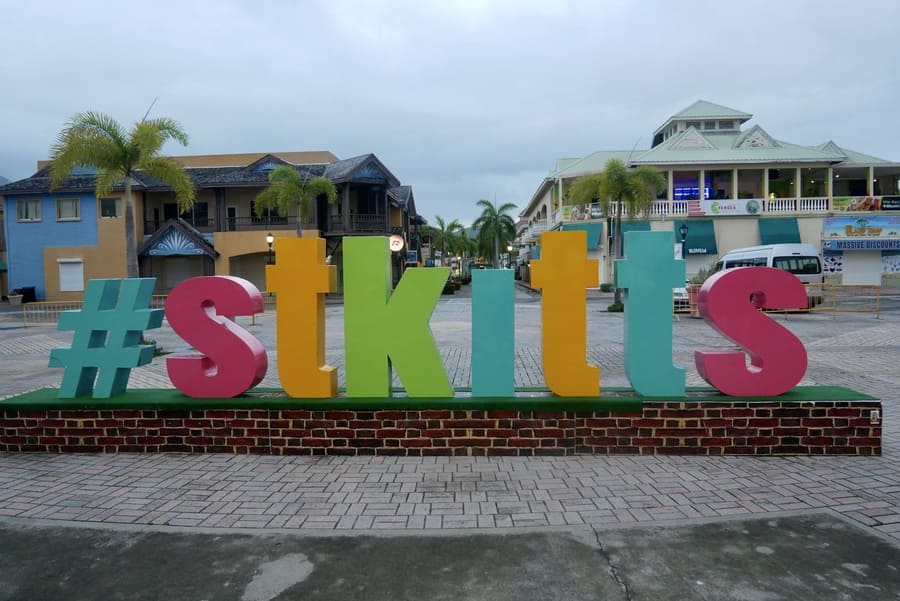
In addition to flying, you can access St Kitts and Nevis by cruise ship or passenger ferry.
The Makana Ferry connects St. Kitts with St. Eustatius multiple times a week (check the website for an updated timetable). The ferry travels onward from St Eustatius to Saba and St Martin.
When to Visit St Kitts and Nevis
Like most of the Caribbean, St. Kitts has warm and sunny weather year-round. The best time to visit St. Kitts is generally from December to April, when the weather is warm, dry, and sunny—perfect for beach days, hiking, and sightseeing.
If you prefer fewer crowds and better deals, consider visiting during the shoulder months of May and November. The weather remains pleasant, with only occasional rain shower.
The Atlantic hurricane season in St. Kitts and Nevis runs from June through November, but direct hits are rare, and most days are still sunny and enjoyable.
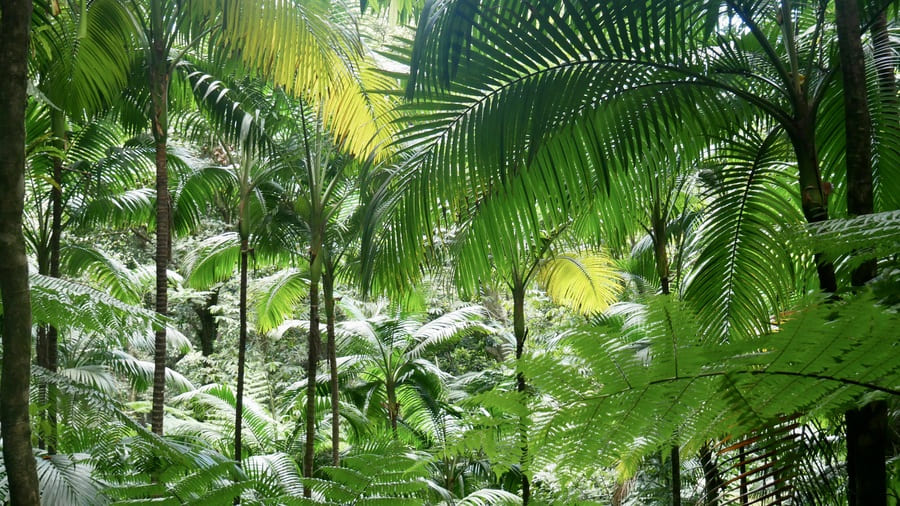
We visited St. Kitts in May and had wonderful weather for the duration of our week-long stay.
****
Each Caribbean island has a unique flavor. Some islands boast long sandy beaches lined with condos and all-inclusive resorts. Others have seldom-visited coastlines and jungle interiors that are practically begging to be explored. Some islands are known for their nightlife and festivals; others cater to honeymooners or families with young children.
The dual-island nation of St. Kitts and Nevis strikes a delicate balance. It has both ample tourism amenities and decent infrastructure while retaining its own laid-back charm and distinct local flavor.

