
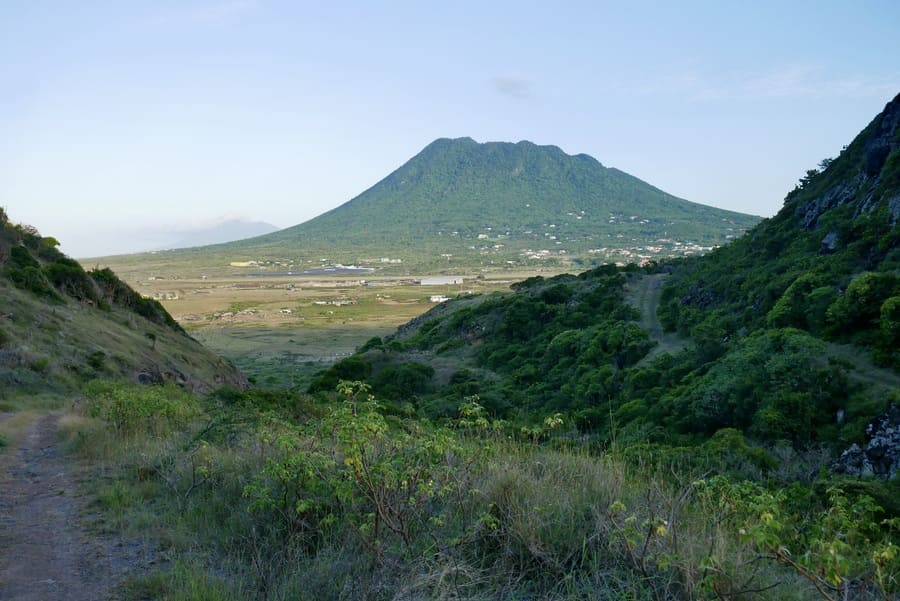
Sint Eustatius: An Island Guide
When it comes to Caribbean islands, there’s no one-size-fits-all. You’ll find some islands that offer turquoise waters and snow-colored sands, others ripe with colorful colonial buildings, and yet other islands with cultural relevance that far outstrips their real estate on the globe.
And then there’s Sint Eustatius—commonly and lovingly referred to as Statia.
Statia is teeny. Blink and you’ll miss it.
The island isn’t a popular bucket list destination, nor does it cater to much tourism at all.
But its relative obscurity is all part of its appeal.
Sint Eustatius Island Overview
Sint Eustatius remains largely untouched by Caribbean mass tourism. The pint-sized island, located in the Windward Islands between Saba and St Kitts and Nevis, is a special municipality of the Netherlands alongside Saba and Bonaire.
Sint Eustatius has a permanent population of about 3,400 residents spread out over eight square miles.
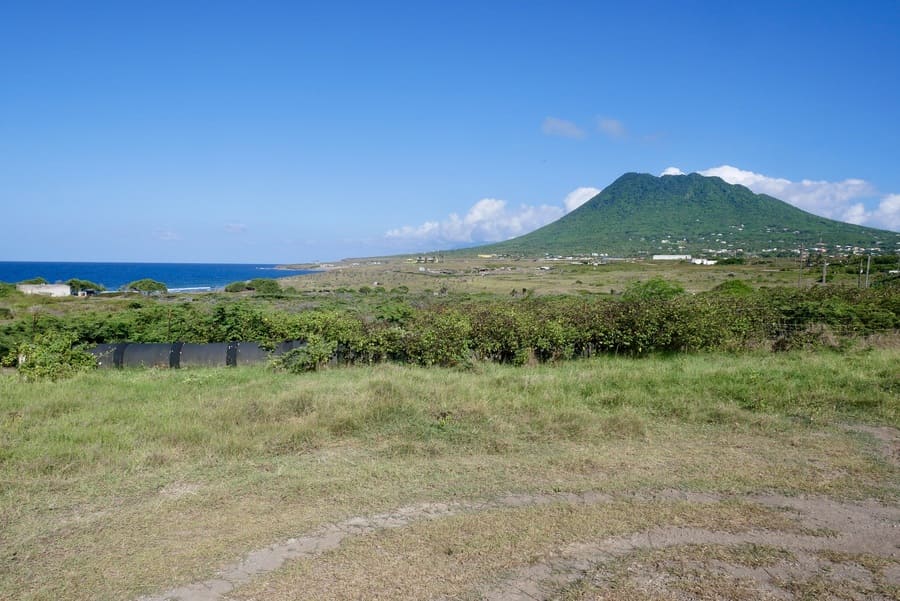
Dominated by The Quill, a volcano on the north side of the island, Statia offers tourists a mix of hiking, snorkeling and sightseeing.
A Brief History of St Eustatius
Statia’s has an outsized historical importance comparative to its diminutive size.
The island’s most famous historical moment came during the American Revolutionary War. In 1776, the island’s governor ordered a cannon salute in response to the arrival of the American brig Andrew Doria. This “First Salute” is widely recognized as the first international acknowledgment of the United States’ independence from Britain.
Sint Eustatius also played an outsized role in Caribbean trading history. The island shifted among European powers multiple times before becoming a major Dutch port. Because it allowed duty-free commerce, Statia became a bustling hub of exchange between ships from Europe, Africa, and the Americas.
By the 19th century, Statia’s importance waned as trade routes shifted and other ports rose to prominence.
Soon, the island settled into a quieter existence as a small Dutch Caribbean community.
Things to See on St Eustatius
Because of its size, St Eustatius’ main sites can be easily seen within a few hours. We stayed on the island for two full days and explored pretty much every labeled dot on the map.
Oranjestad
Oranjestad (not to be confused with the capital of Aruba) is the historic capital of St. Eustatius. Perched dramatically along the island’s western coastline overlooking the Caribbean Sea, the little city was once a thriving hub of 18th-century trade.
Oranjestad is the main settlement on St Eustatius, housing the vast majority of the island’s restaurants and lodging options.
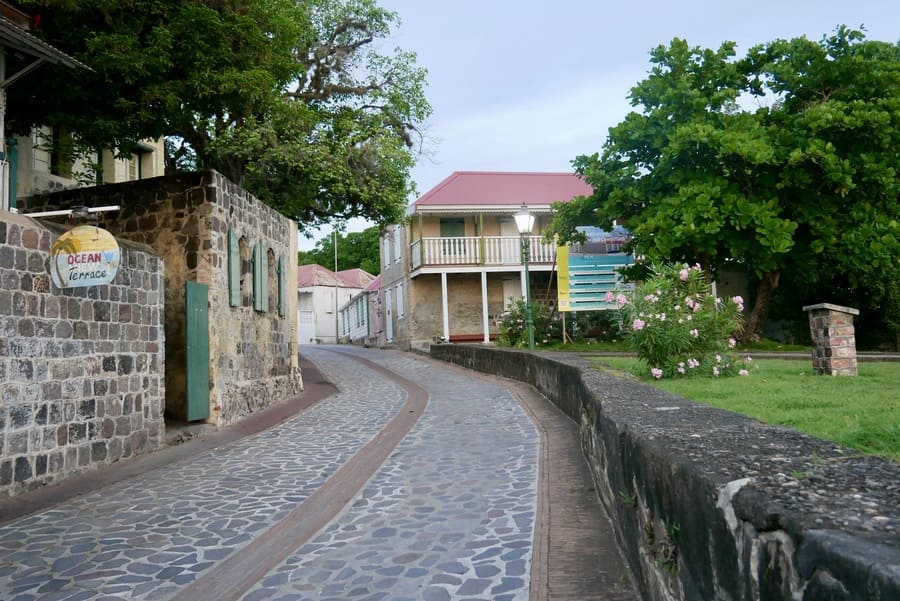
The town is divided into Upper Town, where the island’s historic fort and government buildings sit perched atop cliffs, and Lower Town, which was formerly a warehouse-lined waterfront.
Today, the island’s capital is quiet and atmospheric. It boasts some well-preserved ruins, Dutch colonial architecture, stone pathways, and sweeping ocean views.
Fort Oranje
Fort Oranje is a prominent 17th-century fortress overlooking Oranjestad’s lower town. Built to protect the island and its vital harbor during the height of Caribbean trade, it showcases dramatic views of the island’s shoreline from its lofty perch.
Fort Oranje once served as the island’s main defensive stronghold.
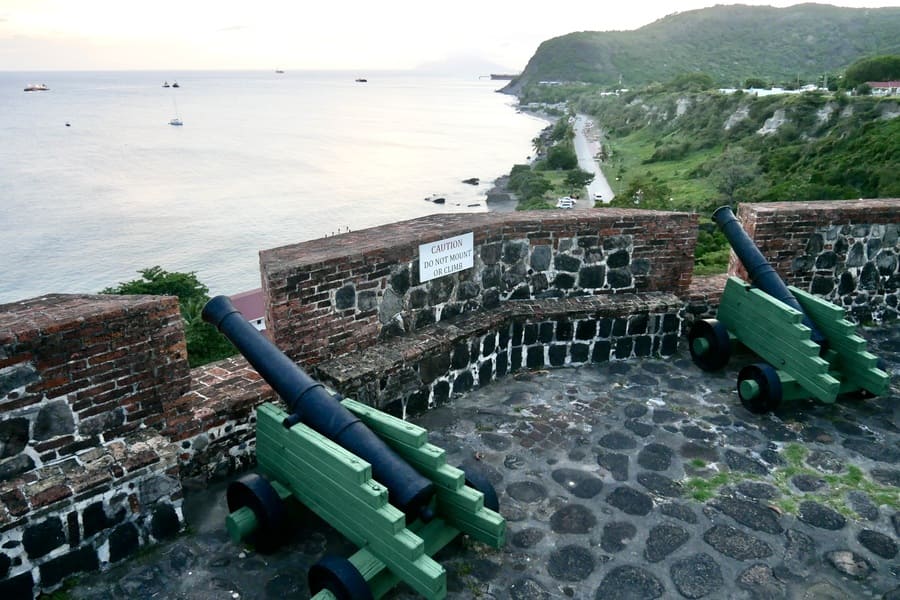
Today, the ruins remain a well-preserved landmark, offering sweeping views of the Caribbean Sea.
Exploring Fort Oranje is one of the top things to do in St Eustatius.
Quill National Park
Quill National Park protects the lush volcanic landscape surrounding The Quill, a dormant stratovolcano that dominates the southern half of St. Eustatius. The park features a network of well-marked hiking trails that wind through dry forest and rainforest.
As one of the island’s most important natural areas, Quill National Park is home to diverse plant and bird species. We kept a lookout for the endemic and elusive bridled quail dove during our hike, to no avail.
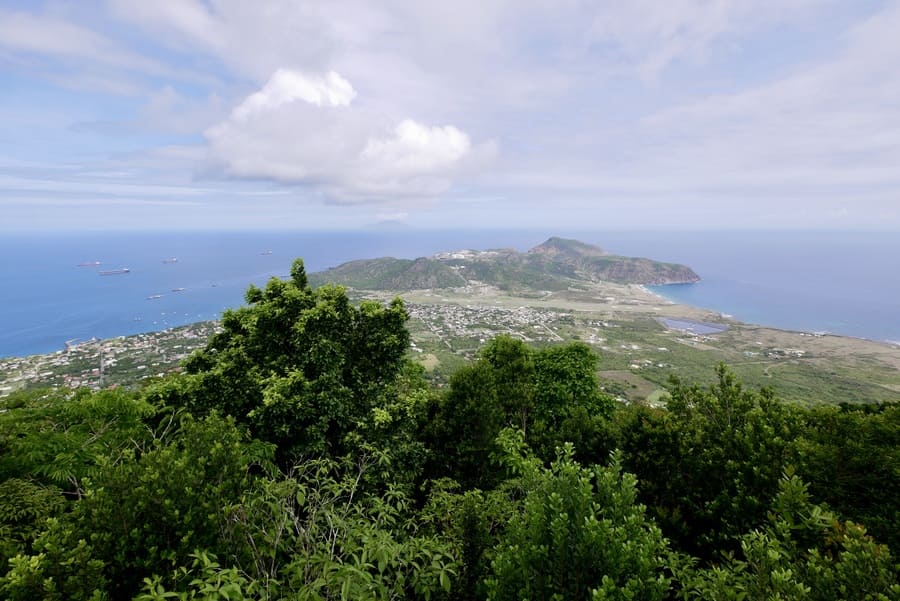
The path to the top of the volcano is shaded and well marked. The trail’s summit offers aerial views of the island and surrounding sea. Hiking the Quill is arguably the top thing to do in St Eustatius.
Fort de Windt
Fort de Windt is a small fortification located near the southern tip of St. Eustatius, overlooking Oranje Bay. Built in the 18th century as part of the island’s coastal defense system, the fort helped protect Statia’s busy harbor during its peak trading era.
There isn’t much to see at For de Windt today. The historical site’s stone ruins are partially overgrown and mostly consist of a platform with a few cannons.
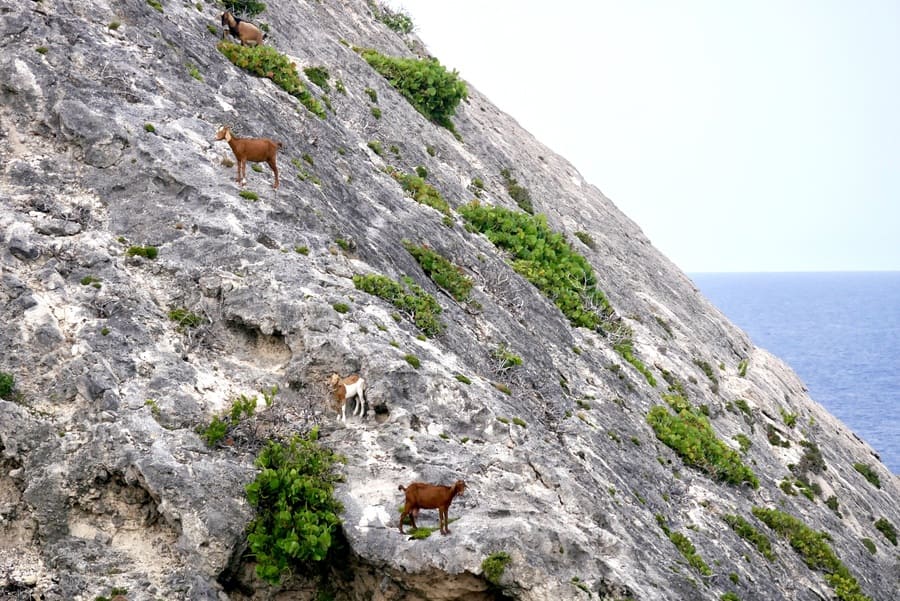
If you have a rental car, however, the views from Fort de Windt are worth a visit. From the ruins, you can admire the views of neighboring Saba and the cliffs plunging into the island’s sapphire sea.
We had the place completely to ourselves during our visit, save for a group of sure-footed goats that were putting on a show of balance and agility.
Zeelandia Beach
On St Eustatius, you won’t find the idyllic Caribbean beaches that draw tourists to places like Eleuthera Bahamas or Anguilla or Saint Barths. Most of Statia’s beaches consist of narrow strips of dull gray sand.
The largest and most beautiful beach in St Eustatius is undoubtedly Zeelandia, on the island’s northern shore. It features a long stretch of sand, pounding surf, and unobstructed views of cliffs and The Quill.
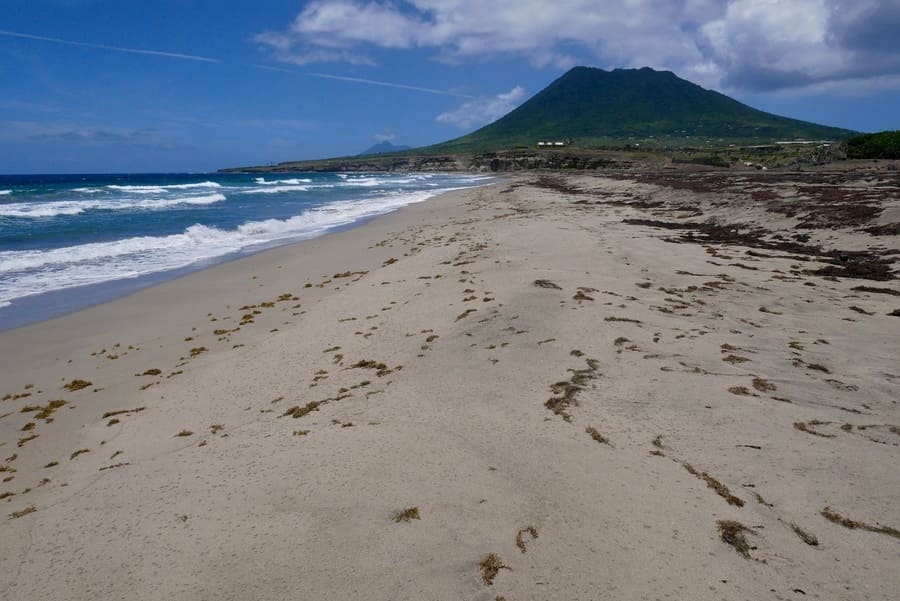
Zeelandia Beach isn’t the type of place I would bring my toddler for a swim, but it is the perfect place to eat a picnic lunch and soak in the views of the island.
Dutch Reformed Church
The Dutch Reformed Church is a historically significant landmark that reflects the island’s deep ties to the Netherlands.
Established in the 18th century during the island’s heyday as a Caribbean trading hub, the church served the Dutch settlers and merchants who lived in Oranjestad.
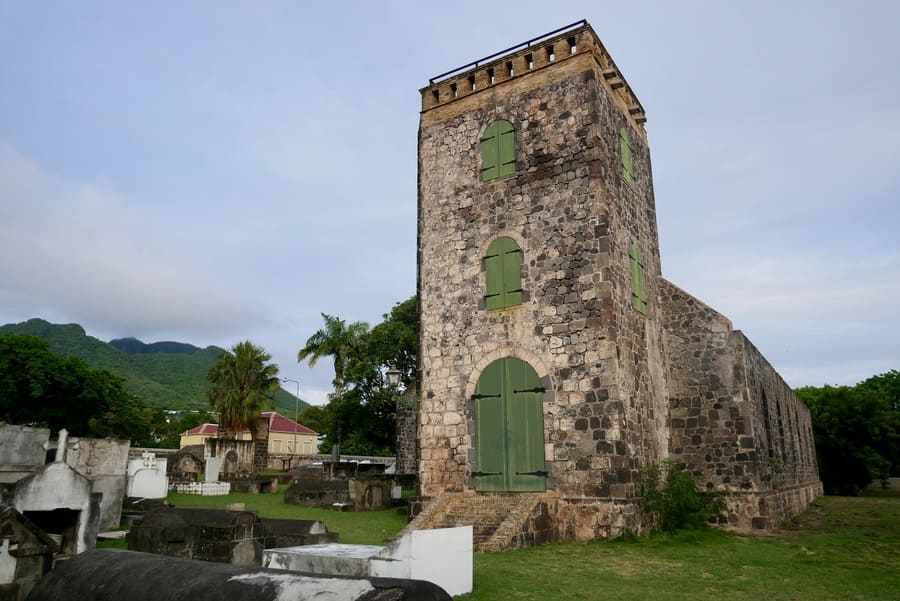
Though no longer an active place of worship, the Dutch Reformed Church merits a quick visit while touring the island’s colonial relics.
Boven National Park
Boven National Park covers the rugged northern hills of St. Eustatius. It encompasses some lovely scenery and protects the island’s flora and fauna.
We chose to hike the Boven Trail to Venus Beach during our tour of the island. The path brought us through beautiful rolling hills and showcased Statia’s unique flora. We crossed dry forest, thorny scrub, and pockets of lush vegetation.
Like The Quill, Boven is especially important for wildlife. It provides habitat for rare plants, nesting seabirds, and roaming goats and iguanas.
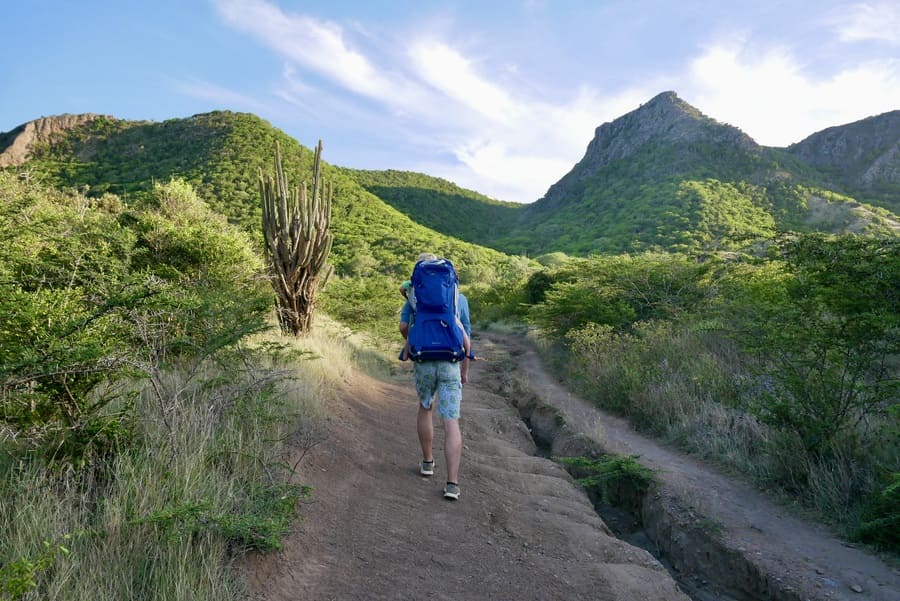
The hike (approximately 3 hours round trip) led us to the boulder-studded shores of Venus Bay.
We did not encounter anyone else during our hike and I’m fairly confident that we had the entire national park to ourselves.
Oranje Bay Beach
Oranje Bay Beach is a dark-sand beach that sits just below the historic town of Oranjestad.
The sandy beach is a popular spot for swimming, snorkeling, and diving, with coral reefs and marine life easily accessible from the shoreline. We found it to be much more suitable for swimming than the windswept shores of Zeelandia Beach.
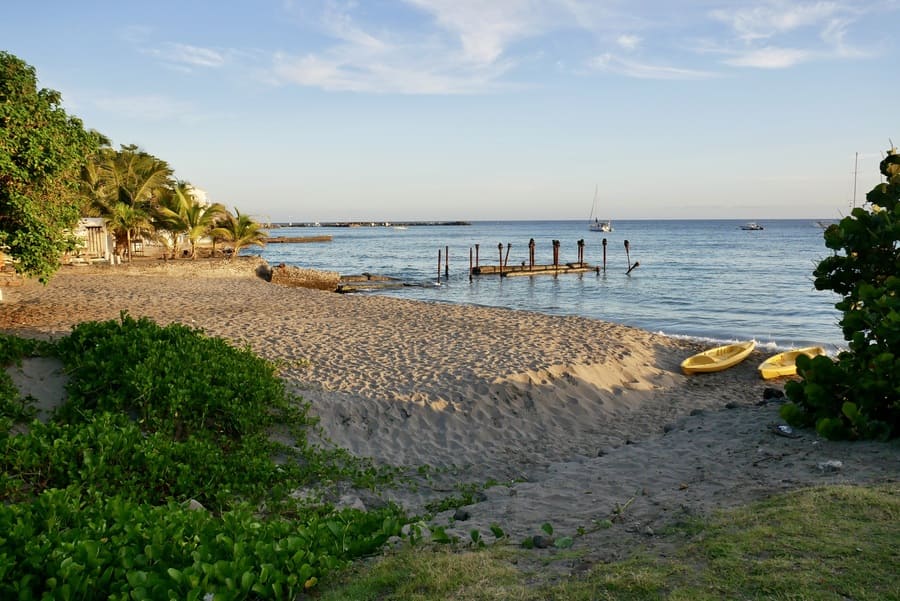
Behind the beach, you’ll find the Subaqua Dive Center, where you can rent gear and organize trips to explore the island’s underwater world.
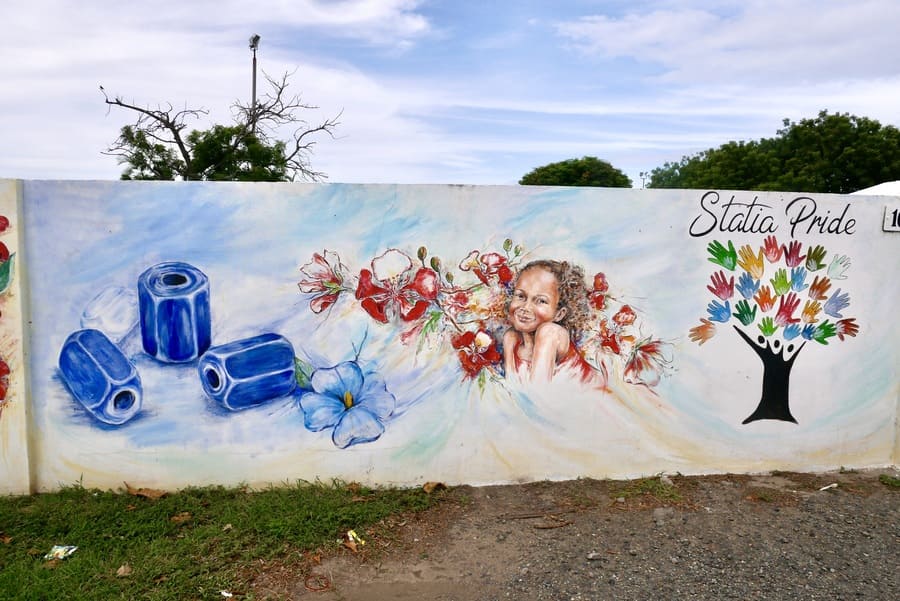
Something unique to Saba is the presence of little round beads that lie amongst the coral. These small cobalt-colored glass beads were brought to the island by Dutch traders in the 17th and 18th centuries. They were historically used as a form of currency, including in transactions involving slaves.
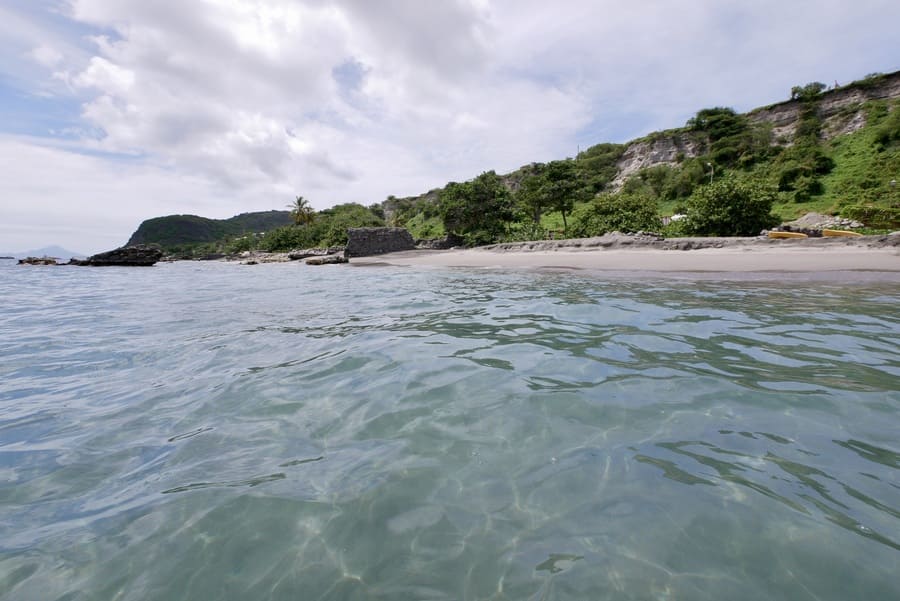
You can still find these little beads while snorkeling or scuba diving, if you’re lucky.
Where to Stay on St Eustatius
We stayed at the Talk of the Town Inn and Suites while on St Eustatius and found it to be a good mid-range option. It was clean and had a pool and a little kitchenette. The Old Gin House, centrally located near the beach in Oranjestad would have been our top choice had they had availability.
The other places to stay in Statia were either out of our budget or had poor reviews.
If budget isn’t an issue for you, then the Golden Rock Dive and Nature Resort appears to be the best place to stay on the island.
Getting around St Eustatius
To get around Statia, you’ll have to hire a taxi, rent a car, or use your own two feet. The areas around Oranjestad are easily explored on foot, but having a car is helpful to get to Zeelandia Beach and Fort de Windt.
We rented a car to get around the island. The rental process was extremely informal and a car set us back $50 per day.
Getting to St Eustatius
Though there are no direct flights between Sint Eustatius and the United States, you can reach the island by plane from St Martin or by boat from a number of the surrounding islands. The Makana Ferry links St Eustatius with Saba, St Martin, and St Kitts.
*****
While Sint Eustatius is rarely the first Caribbean destination that comes to mind, its obscurity makes it all the more special.
You won’t find any cruise docks, souvenir shops, or luxury resorts on the island. In fact, you may not find any other tourists at all.
Instead, what you’ll encounter is a little-visited gem that is authentic, laid-back, and wholly unique.

